
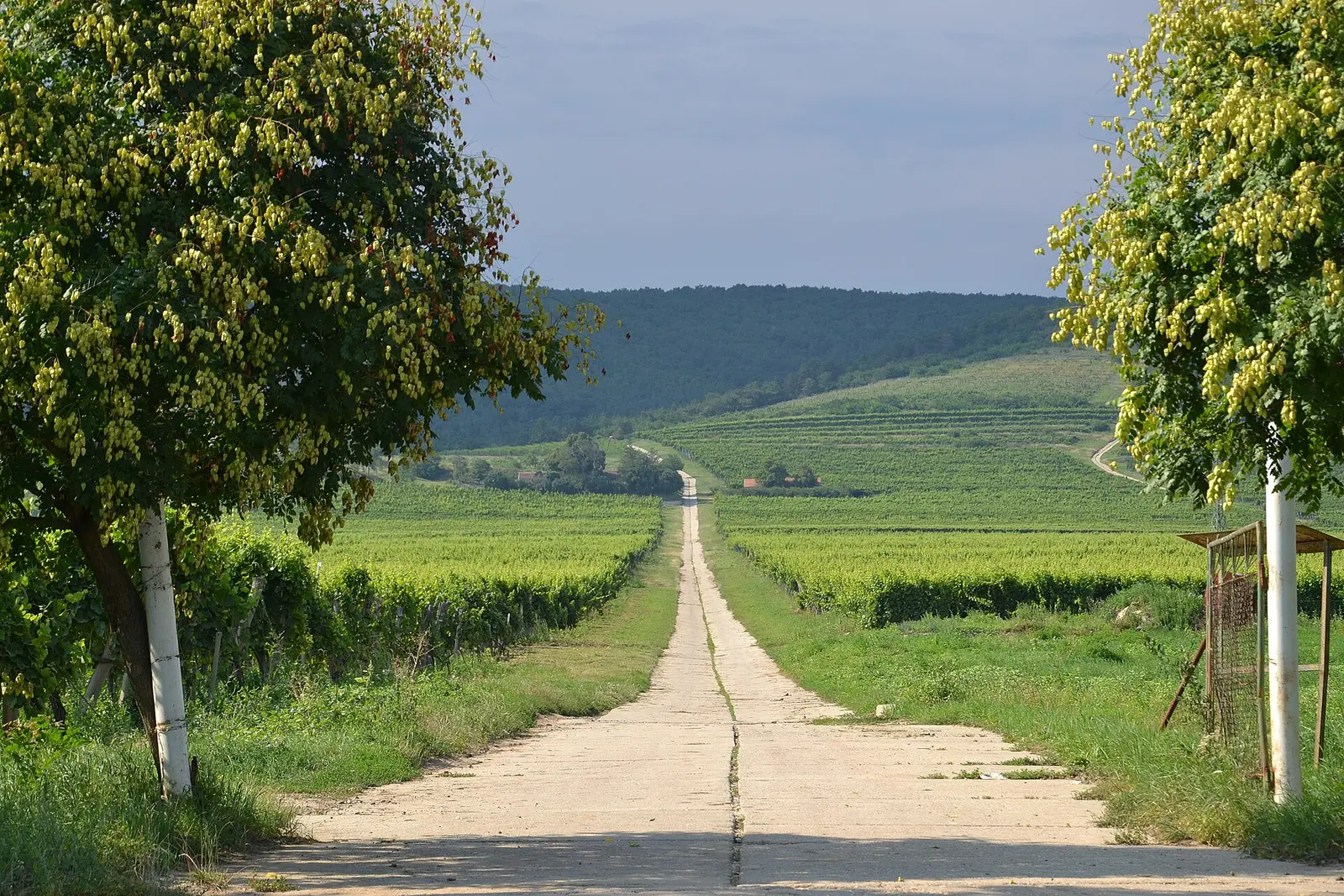
Farming regions of Hungary
- Great Hungarian Plain – corn, grain and sunflower on a large scale, corn seed plantations.
- Southern Plain – paprika fields, apricot and apple orchards, greenhouses heated with geothermal water.
- Tokaj, Eger and Villány – vineyards with a long tradition, the Tokaj landscape on the UNESCO list.
- Farms with native breeds – Mangalica pigs and Hungarian Grey cattle.
What makes Hungary different
Hungary is among the EU's leading producers of corn and sunflower and an important producer of corn seed. Summers are longer and hotter, so variety choice and water management look different from cooler regions. The country uses warm geothermal water to heat greenhouses. Native breeds such as the curly-haired Mangalica have become a premium product, a good example for livestock farmers.
When to go
- June–July – sunflowers in bloom, seed plantations in full swing,
- August–September – paprika and sunflower harvest,
- September–October – corn harvest and grape harvest,
- October–November – late harvest in Tokaj.
Frequently asked questions
What documents do we need? Entry requirements depend on your nationality.
How do we get there? Budapest is the usual gateway. Travel from your home country is arranged or quoted separately.
Who interprets, and how many days should we plan? An agriculture-literate tour leader interprets during visits. We recommend 5–7 days with Budapest and Lake Balaton, for groups from 5 people.