
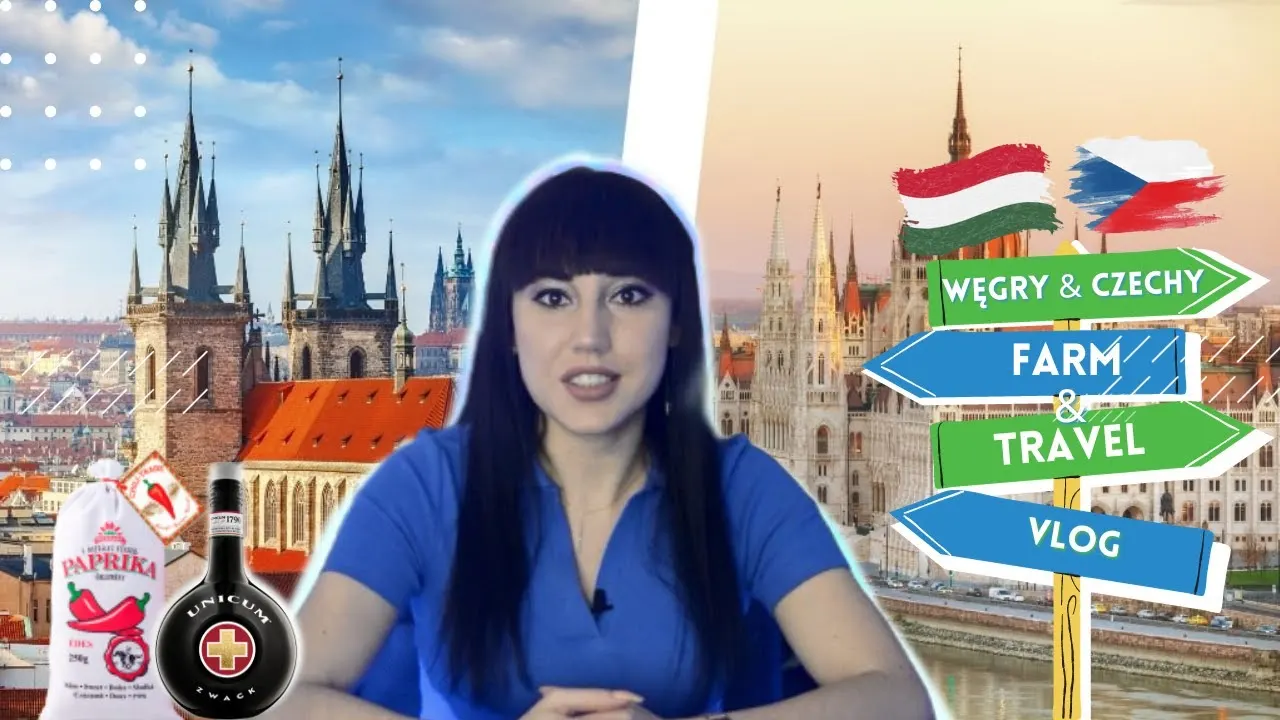
Two countries, two capitals and two different farming models in one trip. In this film (in Polish) we show what we saw in the Czech Republic and Hungary – on the farms and in the cities.
Czech Republic: modern farms and certified seed
We looked at modern Czech farms and at how widely Czech farmers use certified seed – an area where the Czech Republic is ahead of many countries in the region.
In Prague we visited Prague Castle – the largest castle complex in the world by area – St. Vitus Cathedral and the lesser-known Vyšehrad. We tried kulajda soup, roast pork knuckle and trdelník.
Hungary: agriculture and Budapest
In Hungary we talked about how farms there hold their own in the market and which technologies they use. In the evenings there was time for Budapest: Heroes’ Square, the Parliament on the Danube seen from a boat at night, St. Stephen’s Basilica and the moving Shoes on the Danube Bank memorial. To unwind we chose the Széchenyi Baths, and for dinner goulash, halászlé fish soup and lángos.
Who is a tour like this for?
For groups that want to see the agriculture of two neighboring countries in a few days and combine farm visits with two capitals. The program can lean more toward farms if your group needs that.
Hungarian agriculture in brief
Hungary has very good growing conditions and one of the more productive farm sectors in Europe. Cereals cover about 60% of arable land – mainly wheat, oats, barley and rye. Fields also grow sugar beet, corn, sunflower and potatoes, and vegetables take up a large area: cabbage, onions, tomatoes and peppers. Hungary is one of Europe’s largest pepper producers.
Czech Republic: large farms and land rental
Czech agriculture stands out for its large average farm size – one of the largest in the European Union. Another hallmark is the high share of rented land: about 80% of land is farmed by operators who do not own it. Farmland covers more than half of the country, about three quarters of it arable: wheat, barley, sugar beet, potatoes, hops and forage crops. Farmers raise pigs, cattle and poultry.
A short trip, two countries
A program like this can be done in a few days – even as a long weekend. It is a good idea for a group’s first trip together, or as an incentive trip for co-op members or a company’s customers.
See also: how to organize an agricultural study tour for a group.
See the tour programs: agricultural study tour to the Czech Republic and agricultural study tour to Hungary. We will match the dates and farms to your group.
Design a program