
 Farm tours in Bolivia
Farming regions of Bolivia
- The Santa Cruz lowlands – soybeans, corn, sorghum, sunflowers and sugarcane, often with two seasons a year, as well as farms in the Mennonite colonies.
- Eastern pastures – beef cattle of zebu breeds and their crosses on tropical pastures.
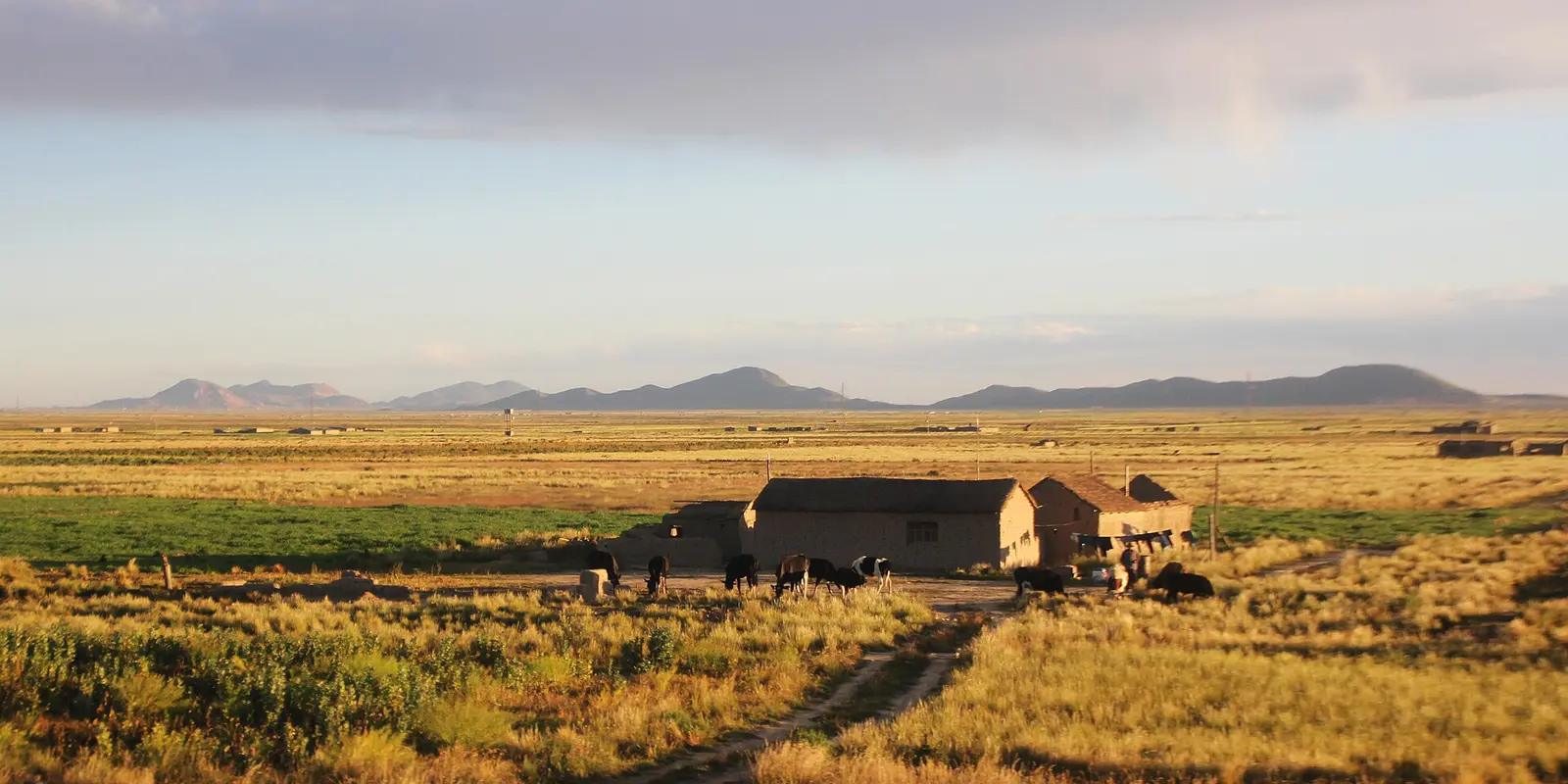
- The Altiplano (Oruro, around Uyuni) – quinoa for export, llamas and alpacas on high-mountain pastures.
- Andean valleys around Cochabamba – potatoes, terraced crops and dairy farms.
What makes Bolivia different
The contrast is twofold. In the lowlands, farms have scaled up quickly in recent decades and use no-till and large machinery fleets. In the Andes, farmers contend with frost, drought and strong sun at around 3,600–4,000 m above sea level, and potatoes are traditionally preserved by freeze-drying (chuño). The Andes are the homeland of the potato, and Bolivia is one of the two largest quinoa producers in the world. In the north of the country, Brazil nuts are gathered in the forest.
When to go
- May–October – the dry season, good conditions for travel across the Altiplano,
- April–May – quinoa harvest on the plateau,
- November–March – the rainy season; the Uyuni salt flat turns into a mirror, but roads can be harder.
Frequently asked questions
Is altitude a problem? On the Altiplano you need to allow for altitude sickness, so the program should include time to acclimatize.
How do we get to Bolivia? Flights from your home country are arranged or quoted separately. An agriculture-literate tour leader interprets during visits.
What documents do we need? Entry requirements depend on your nationality – check the current rules before you travel.