
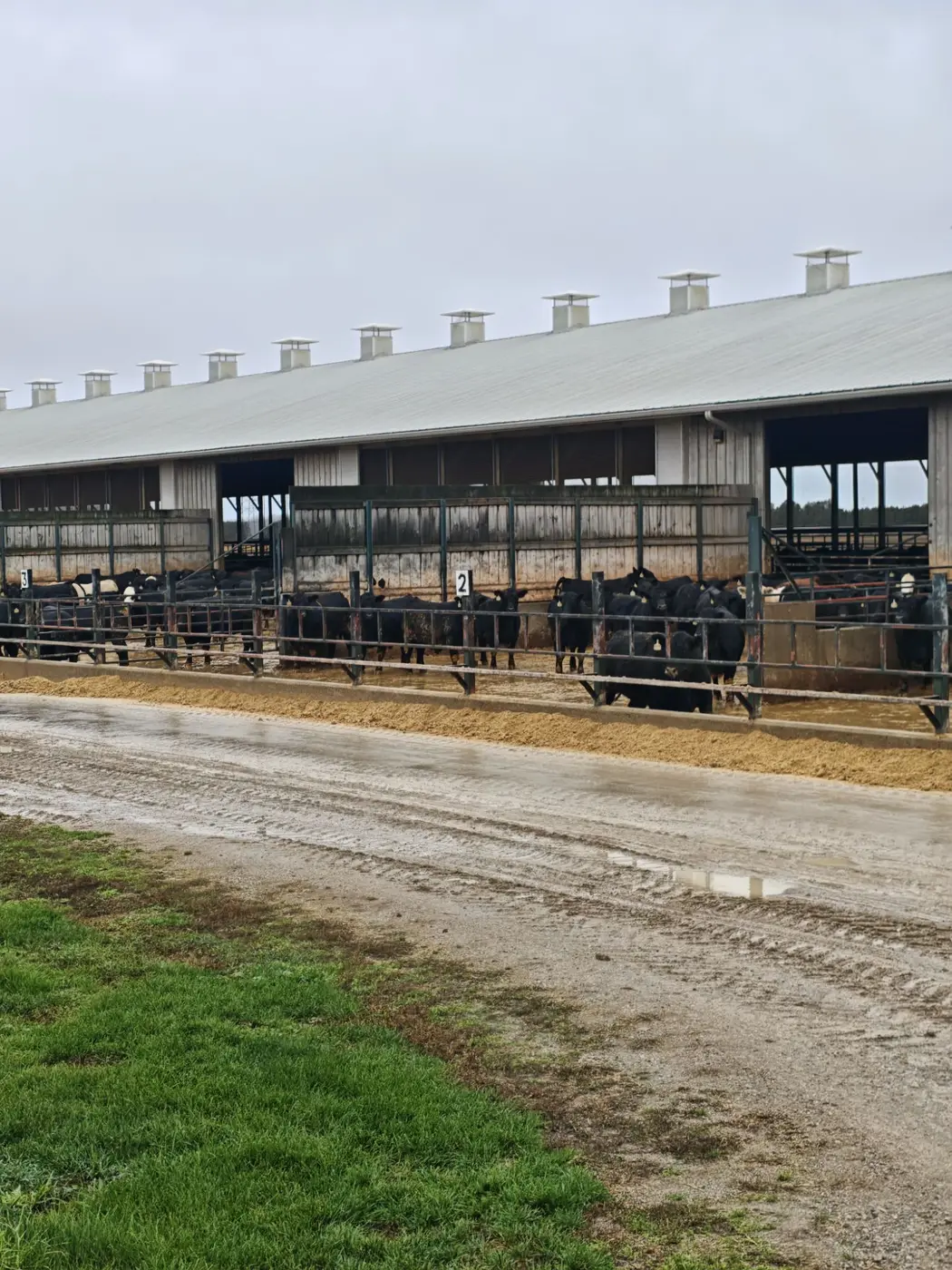
In early November 2026 we took a group of beef cattle farmers from Europe to the Canadian province of Ontario. In five days the group saw a family farm with dairy and beef cattle, two large feedlots, a University of Guelph research center and the world’s largest indoor agricultural fair – the Royal Winter Fair in Toronto.
A dairy and beef farm near London
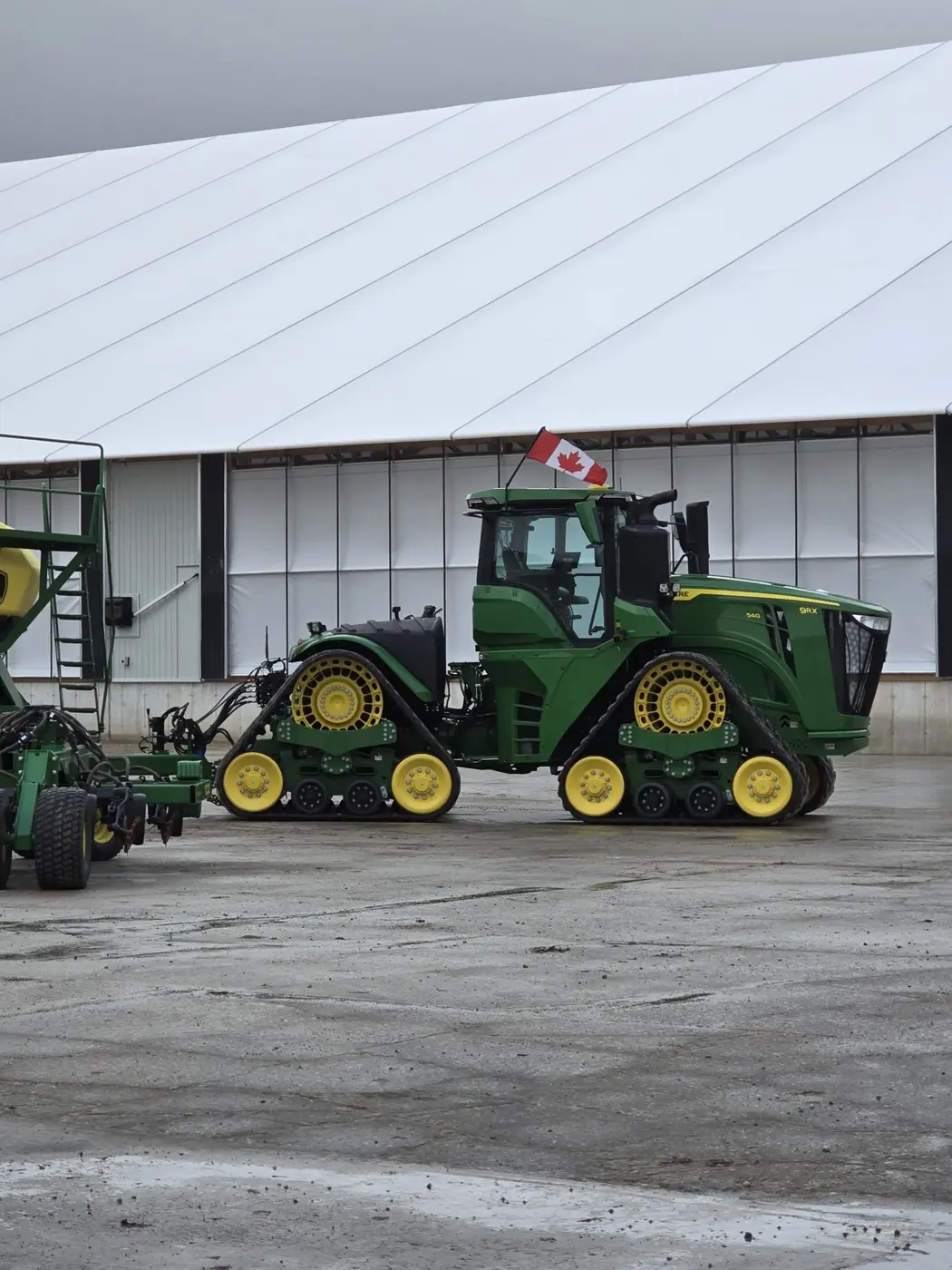
First visit: a family farm near London, Ontario, which started in 1981 with 40 cows on 280 acres and today crops around 3,000 acres. The family milks about 400 Holsteins in a rotary parlor and at the same time finishes about 2,500 beef cattle – half of them crossbreds raised from calves born in their own dairy herd. They sell about 3,000 finished cattle a year.
For beef producers from Europe this is an interesting model: the dairy herd as a source of calves for finishing, and the farm’s own crops as the feed base.
A 3,000-head feedlot: one site, three barns
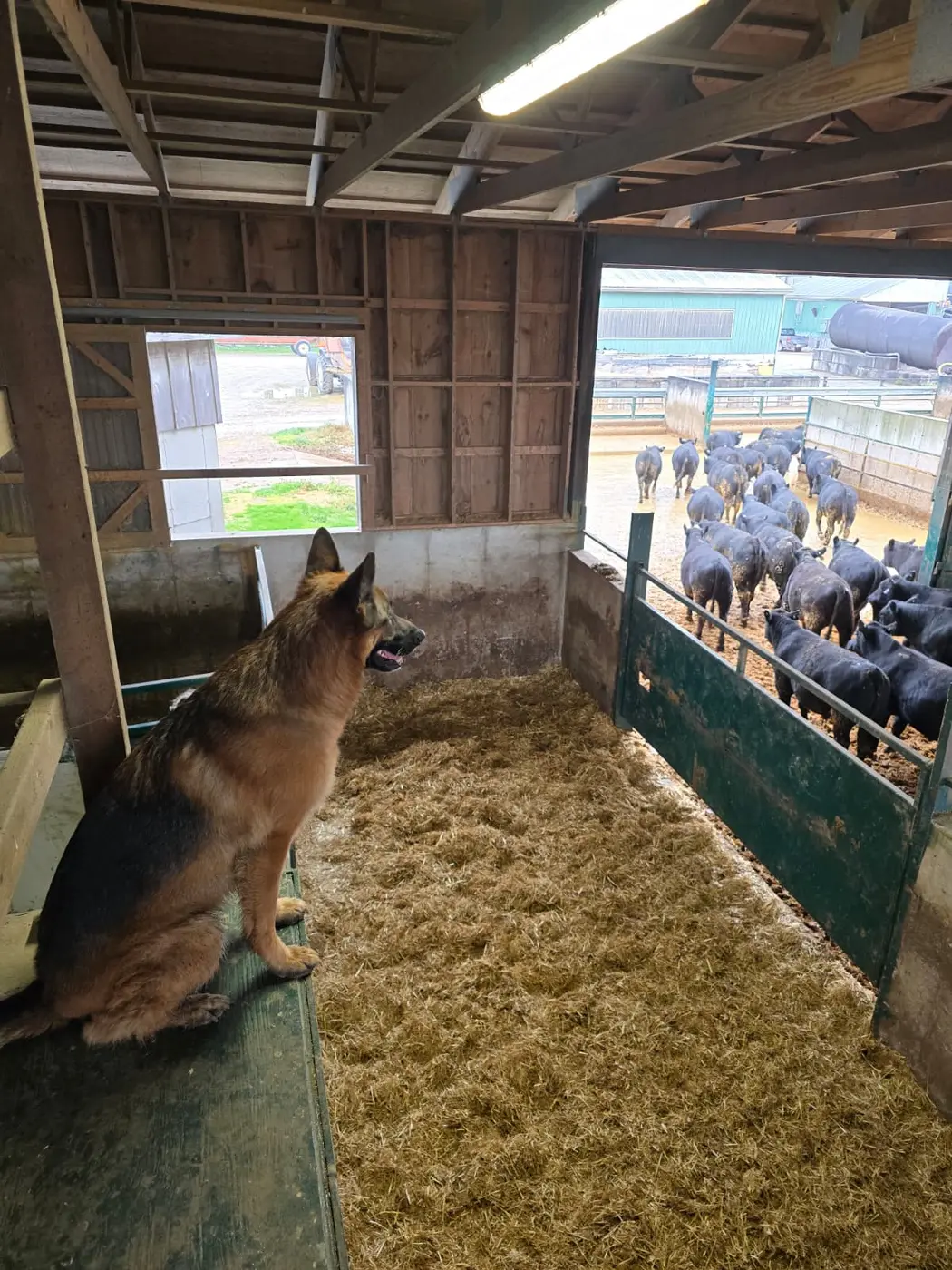
On day two the group visited a family feedlot that carries 2,700–3,000 head at any time. It buys crossbred steers and heifers at about 600 lb (approx. 270 kg) and finishes them for slaughter. Feed comes from the farm’s own land.
What interested the farmers most:
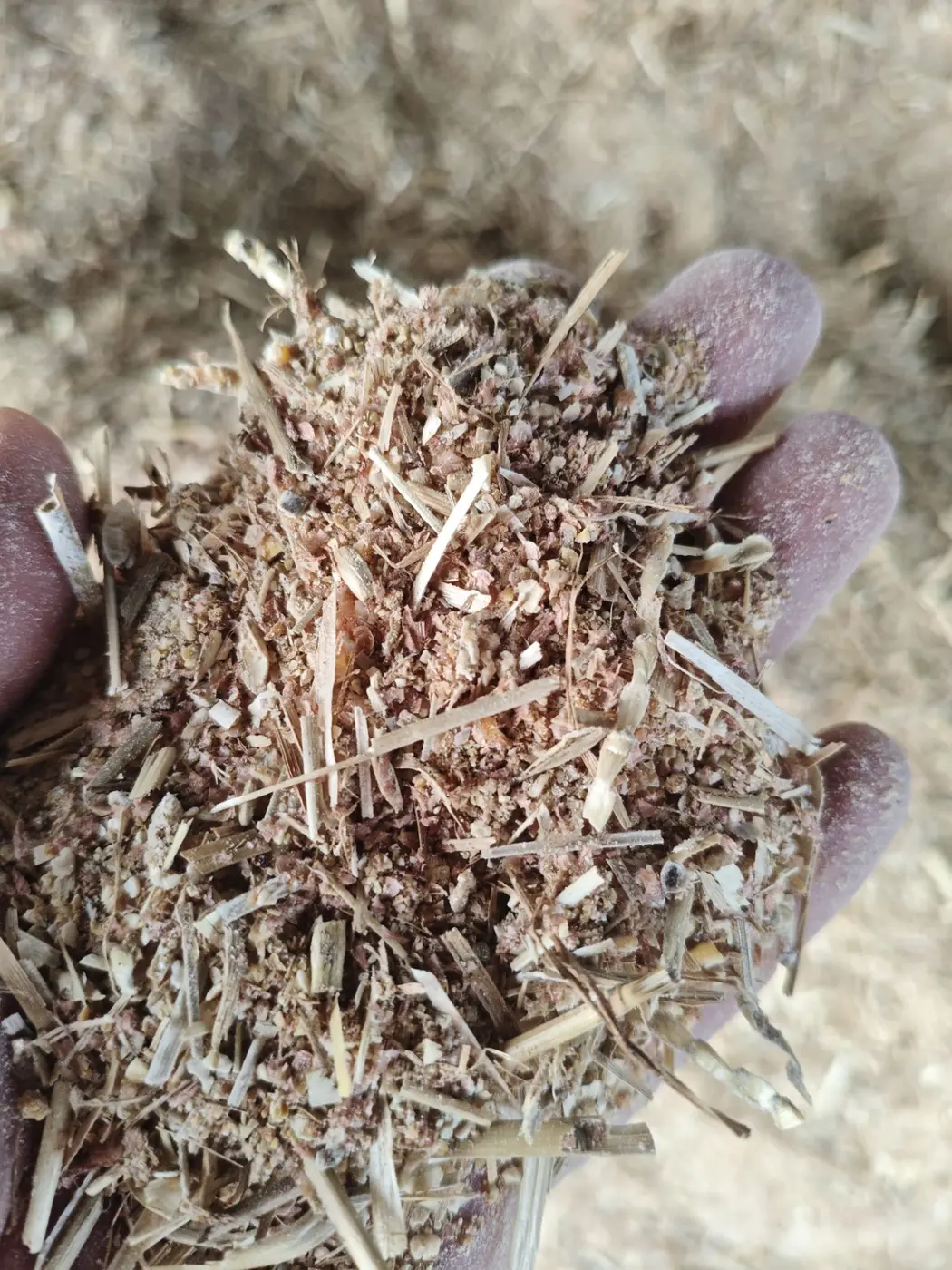
- One site instead of three. The owners merged three former sites into one, which simplified treatment, feeding and building maintenance. Cattle move through three barns: a starter barn on slatted floors, a grower barn and a finishing barn on deep bedding. The alley in the 800-head barn is cleaned twice a week, and fresh chopped straw goes into the pens every 2–3 days.
- Hoof health and biosecurity. A copper sulfate mat, regular hoof trimming and equipment washing reduce lameness and digital dermatitis. Rubber-topped slats cut down on slipping, so cattle walk to the feed bunk more readily and gain better.
- Data. Software records every treatment, calculates drug doses, tracks withdrawal periods before shipping and compares daily gains across the stages of finishing.
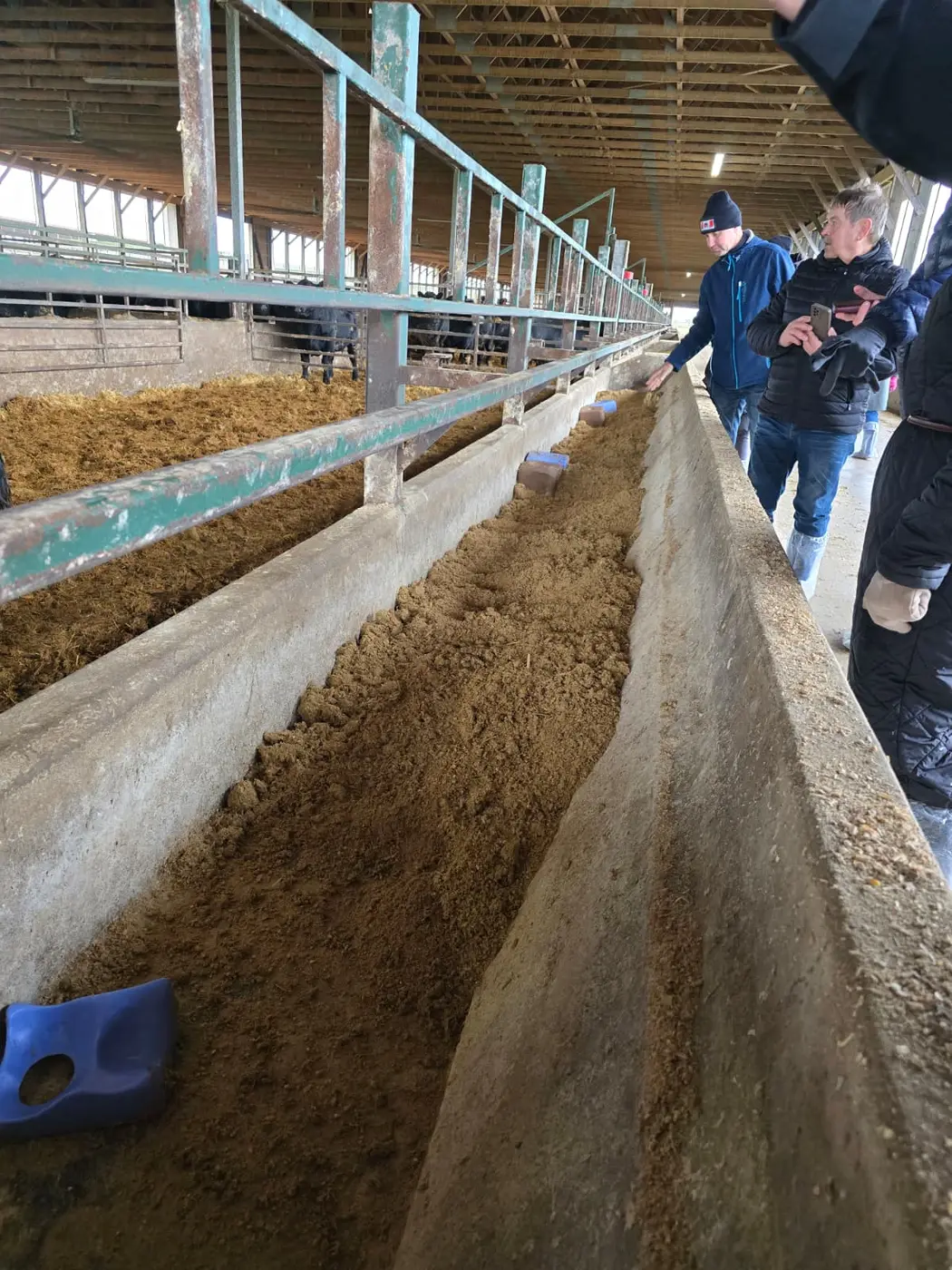
- Feed. After wheat, the farm sows a mix of oats, peas and barley, harvested as a high-protein forage. This lets them reduce the share of distillers’ grains in the ration.
Finishing on a scale of 100,000 head a year
In the afternoon the group visited one of Ontario’s largest cattle buying and finishing businesses. The company has been operating since 1971, buys about 100,000 head a year and, together with partners, has about 15,000 head on feed.
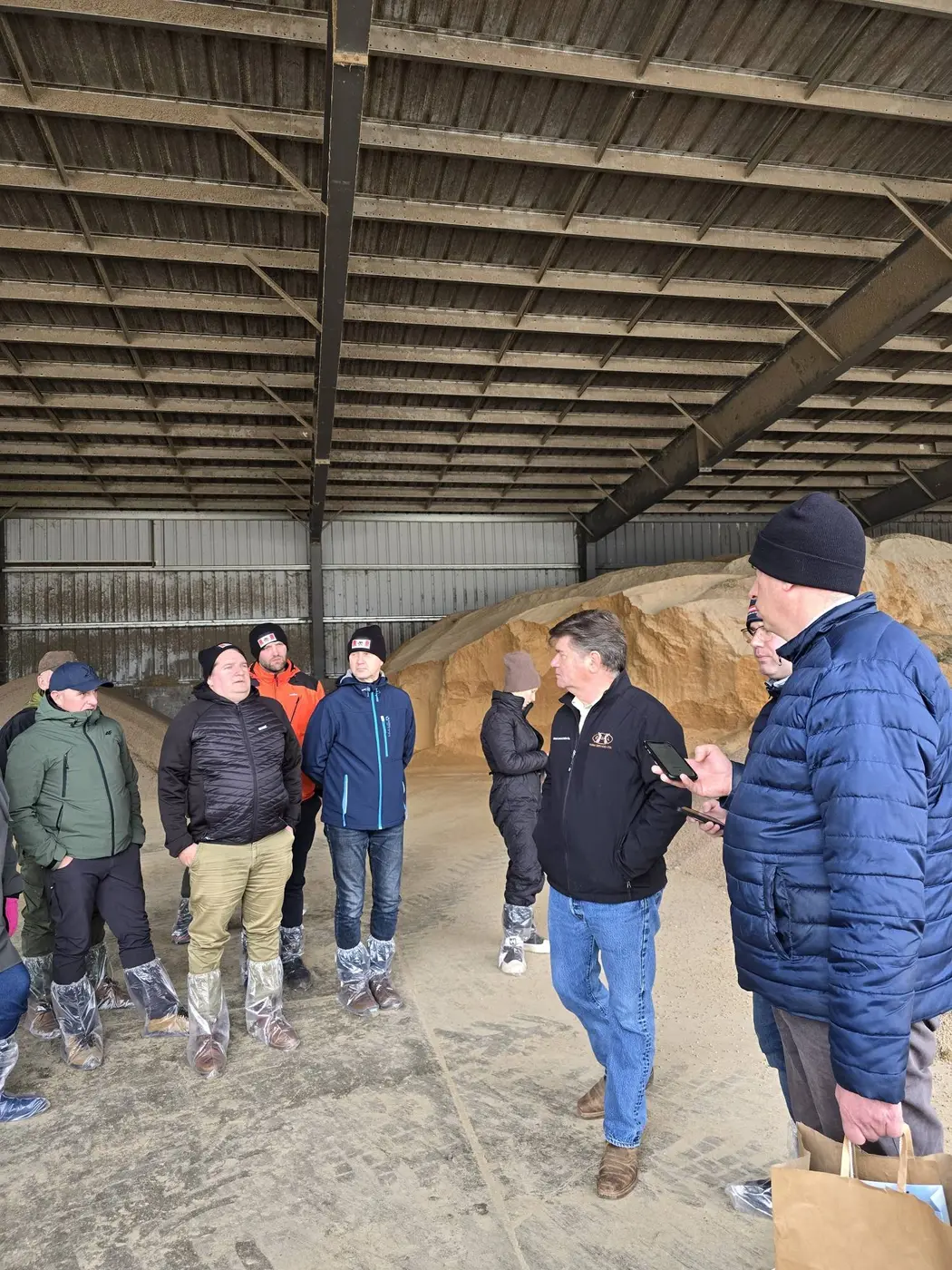
- Buying cattle. Most animals come from western Canada, mainly southern Alberta. The host explained how freight costs translate into the price of feeder cattle in Ontario.
- Precision feeding. Electronic ID, ultrasound and monthly group weighing – according to the company – shorten the finishing period by about 10 days and improve meat yield.
- Quality and market. About 60% of the cattle are Angus type, and 85–90% of carcasses grade AAA, some even Prime.
- Data and cooperation. The owner is building an exchange of health and vaccination information with cow-calf producers in the west of the country.
The Royal Winter Fair in Toronto
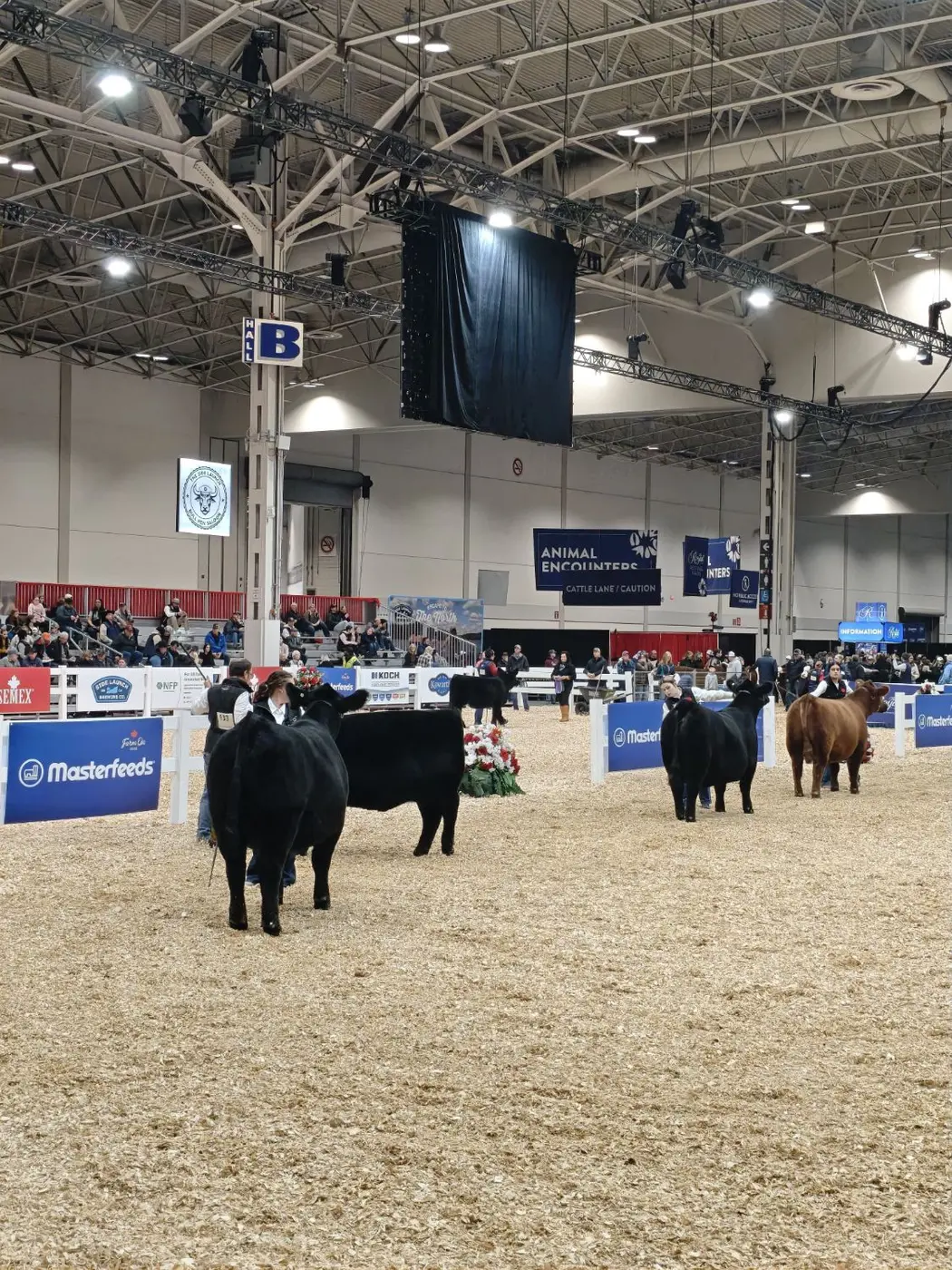
Day four was the Royal Agricultural Winter Fair – the world’s largest indoor agricultural and equestrian show, held every November in Toronto. The group watched beef cattle shows and competitions and toured the halls with feed, genetics and barn equipment. After the fair there was time for Toronto: City Hall with the TORONTO sign, the area around the CN Tower and the Lake Ontario waterfront.
The beef research center in Elora
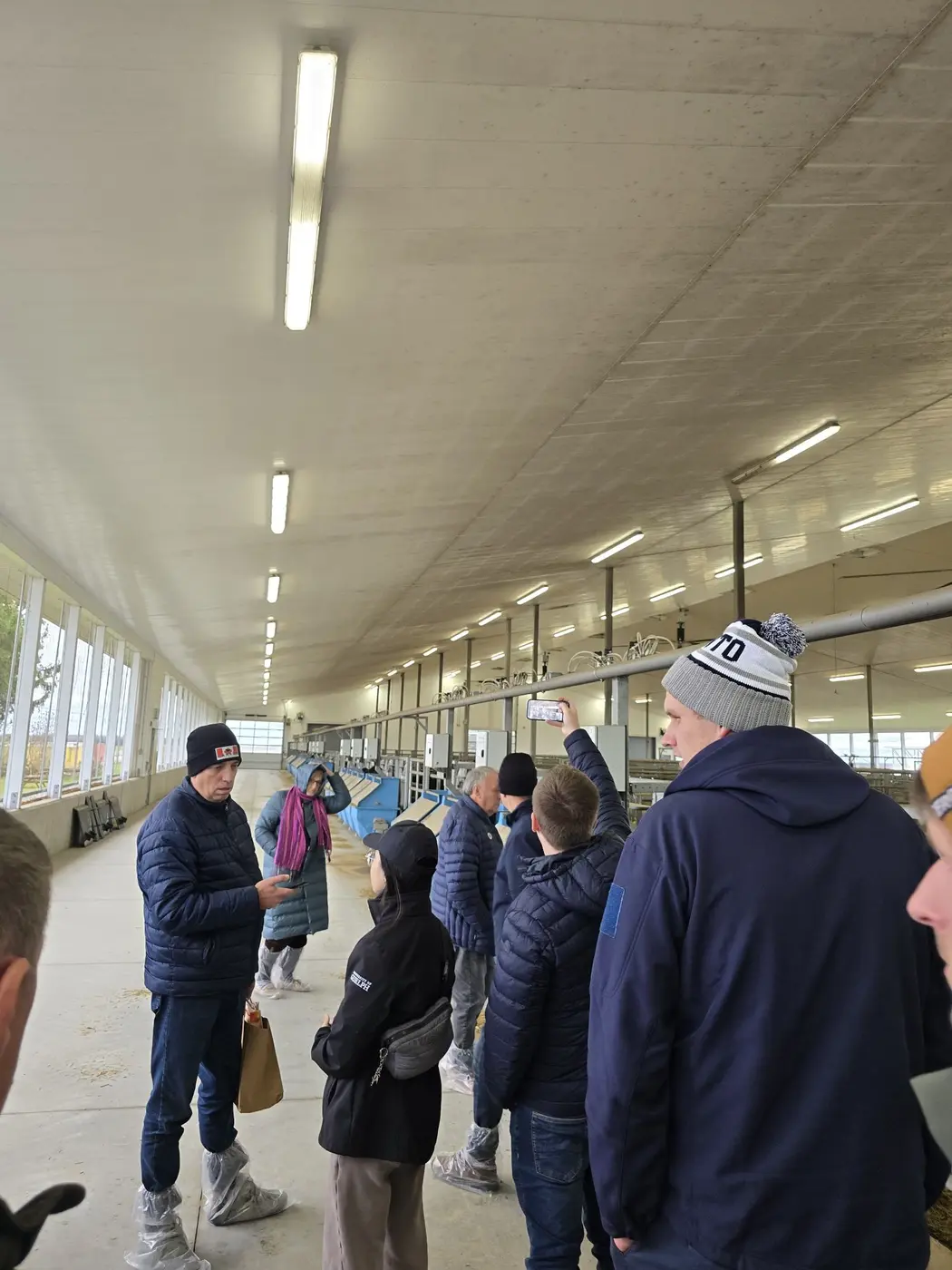
On the last day the group visited the Ontario Beef Research Centre in Elora, run by the University of Guelph. Opened in 2019, the center has a closed herd of Angus × Simmental crossbreds: barns for 288 cows with calves and 120 replacement heifers, a 288-head feedlot and about 121 ha of pasture. Research covers feed efficiency, genetics, reproduction, animal welfare and methane emissions, among other topics – the kind of work that reaches ordinary farms a few years later.
What do beef producers learn in Canada?
- how to run large-scale finishing with a simple, repeatable system,
- how treatment, weighing and gain data translate into financial results,
- how to manage hoof health and biosecurity in large groups of cattle,
- how cattle are bought and sold along the chain from ranch to packing plant.

Want to show your group Canadian feedlots? We will put together a program for beef or dairy producers – with or without the Royal Winter Fair, on dates that suit you.
See the Canada tour