
In early November 2026 we took a 36-person group from the farm sector to Morocco. Six days from Agadir through Marrakech to Essaouira: olive and orange farms, an argan cooperative, a winery, vegetable farms in the Souss-Massa region – plus markets, medinas and food that show how farming fits into life in this country.
Water – the central topic of Moroccan agriculture
Morocco farms in a climate where every liter of water counts. That is why irrigation is the key to understanding farms here: it decides what can be grown and how much, and export orchards and vegetables grow where nothing would grow without water.
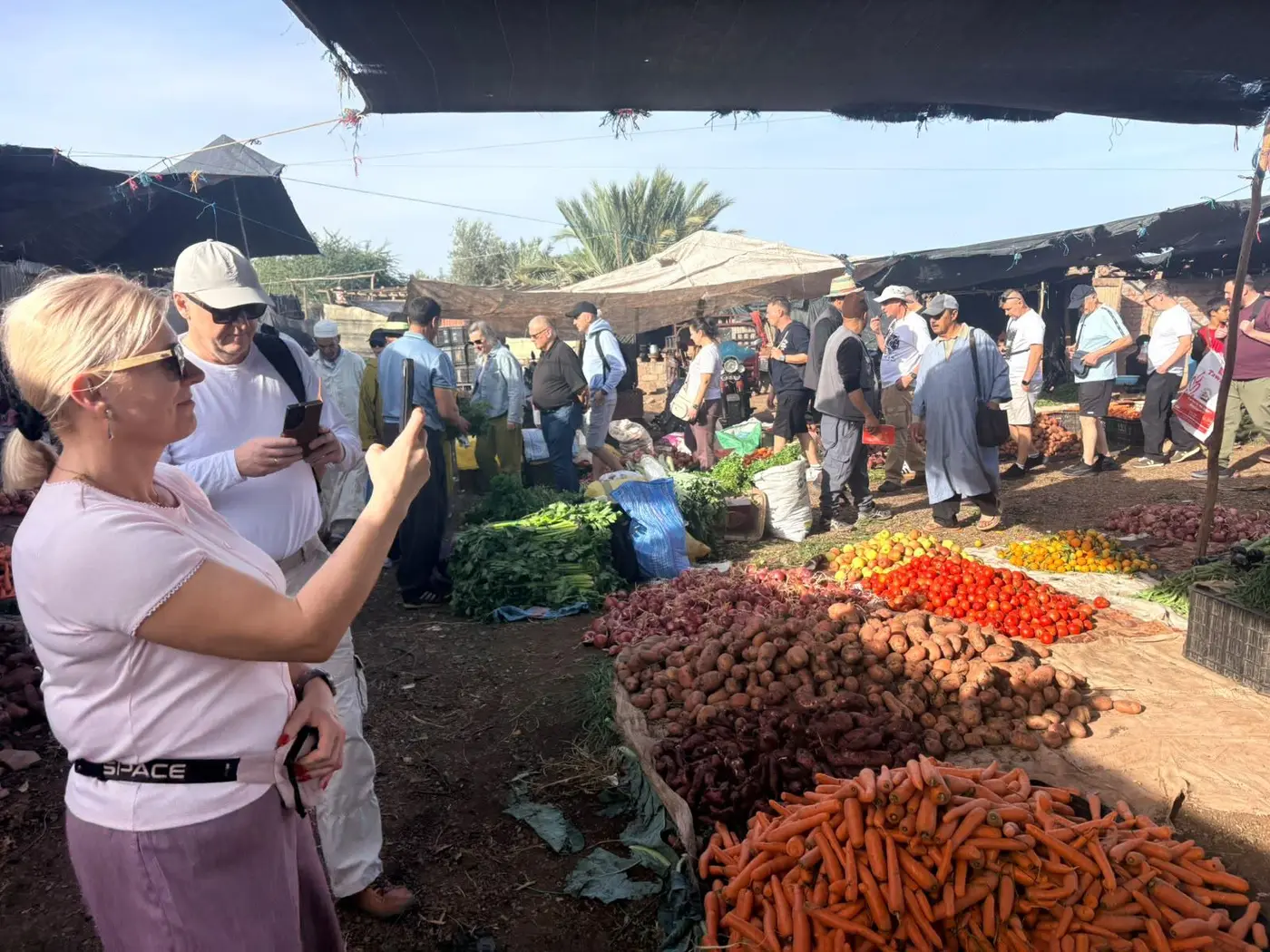
A Berber market and the Ourika Valley
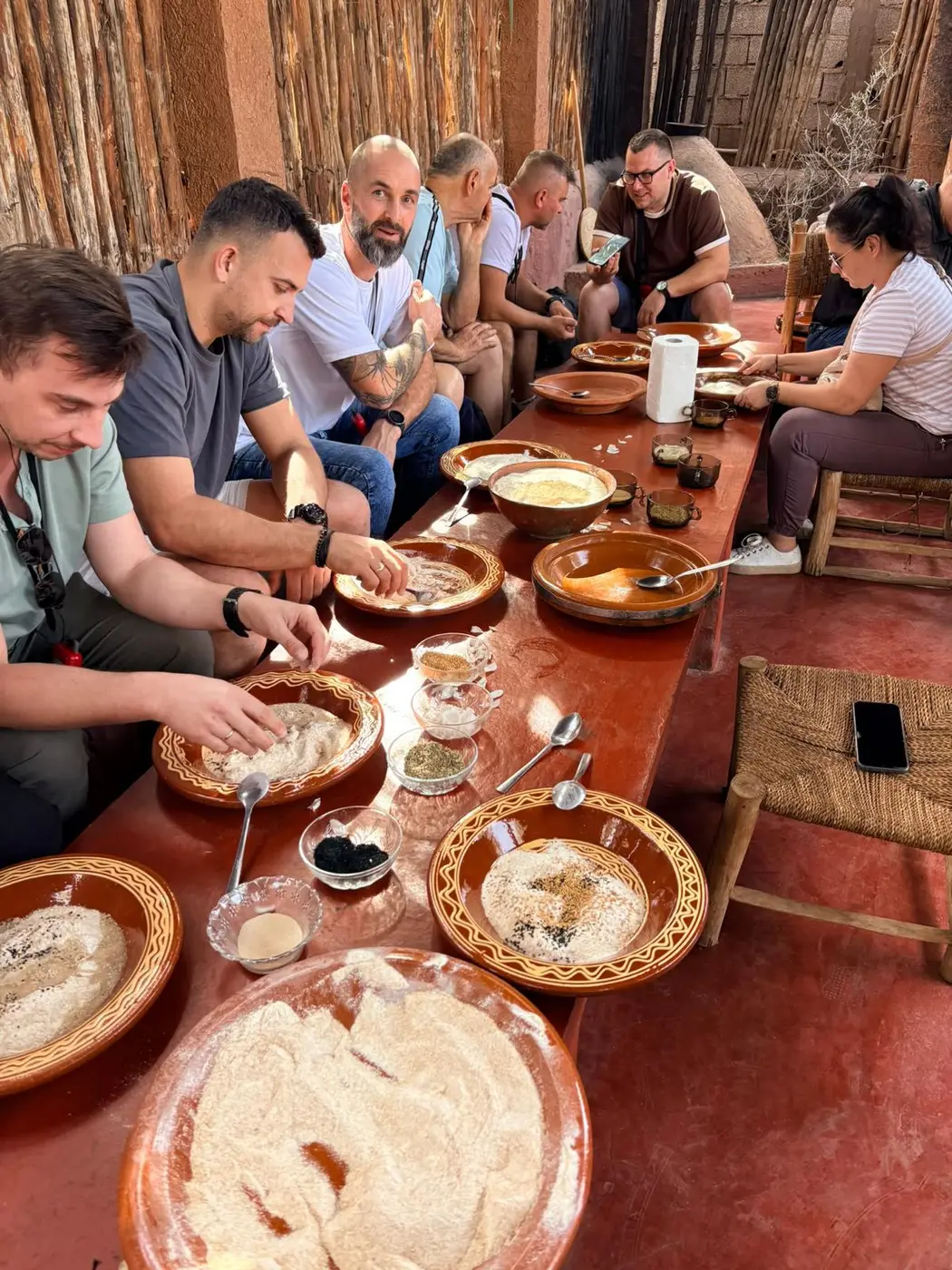
Day three began at a Berber livestock and produce market – where local farmers sell cattle, sheep, vegetables and fruit. Then the group drove to the Ourika Valley at the foot of the Atlas: to an aromatic herb garden with a demonstration of traditional bread baking, served with honey, olives, olive oil, local butter and Moroccan tea.
An organic olive farm
At an organic olive farm the conversation centered on irrigation: how much water an olive grove needs, how to save it and how to farm without synthetic inputs. The group had lunch on the farm.
An export orange farm in Chichaoua
Day four began at a modern orange farm in the Chichaoua area, about an hour and a half from Marrakech. Fruit from this farm is exported, among other markets to Canada and the United Kingdom. Participants saw what an orchard geared to foreign markets looks like.
A winery and an argan cooperative
On the way to Essaouira the group visited the Val d’Argan winery for lunch and a tasting, and then a cooperative producing argan oil. The argan tree grows naturally only in southwestern Morocco, and the cooperatives show how to turn one raw material into a premium product for markets worldwide.
Vegetables from the Souss-Massa region
The last day of the program was technical visits to vegetable farms around Khmiss Ait Amira (Chtouka Ait Baha area), about an hour from Agadir. It is one of Morocco’s most important vegetable-growing regions and the source of a large share of the vegetables exported to Europe.
Marrakech, Essaouira and Agadir
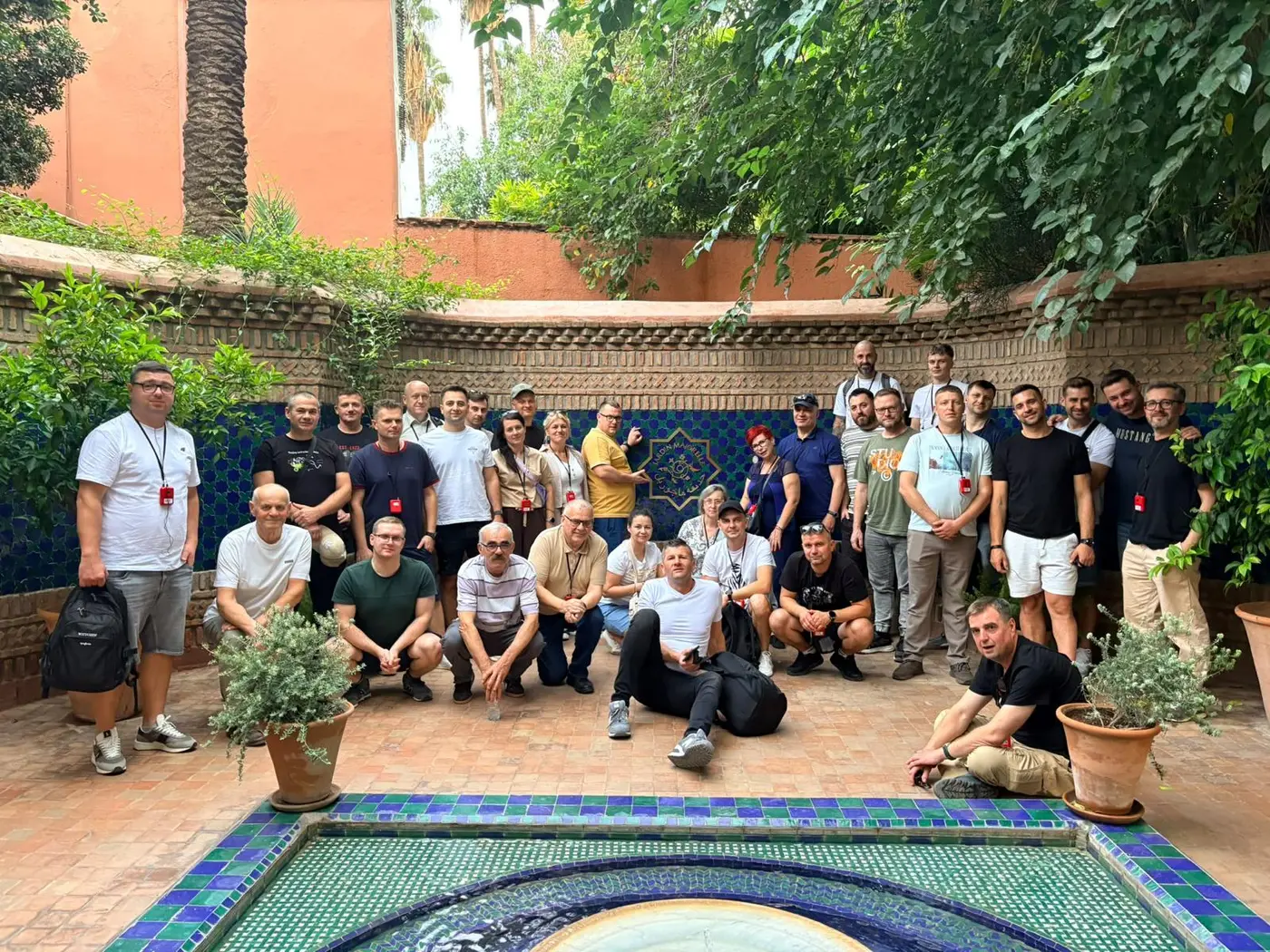
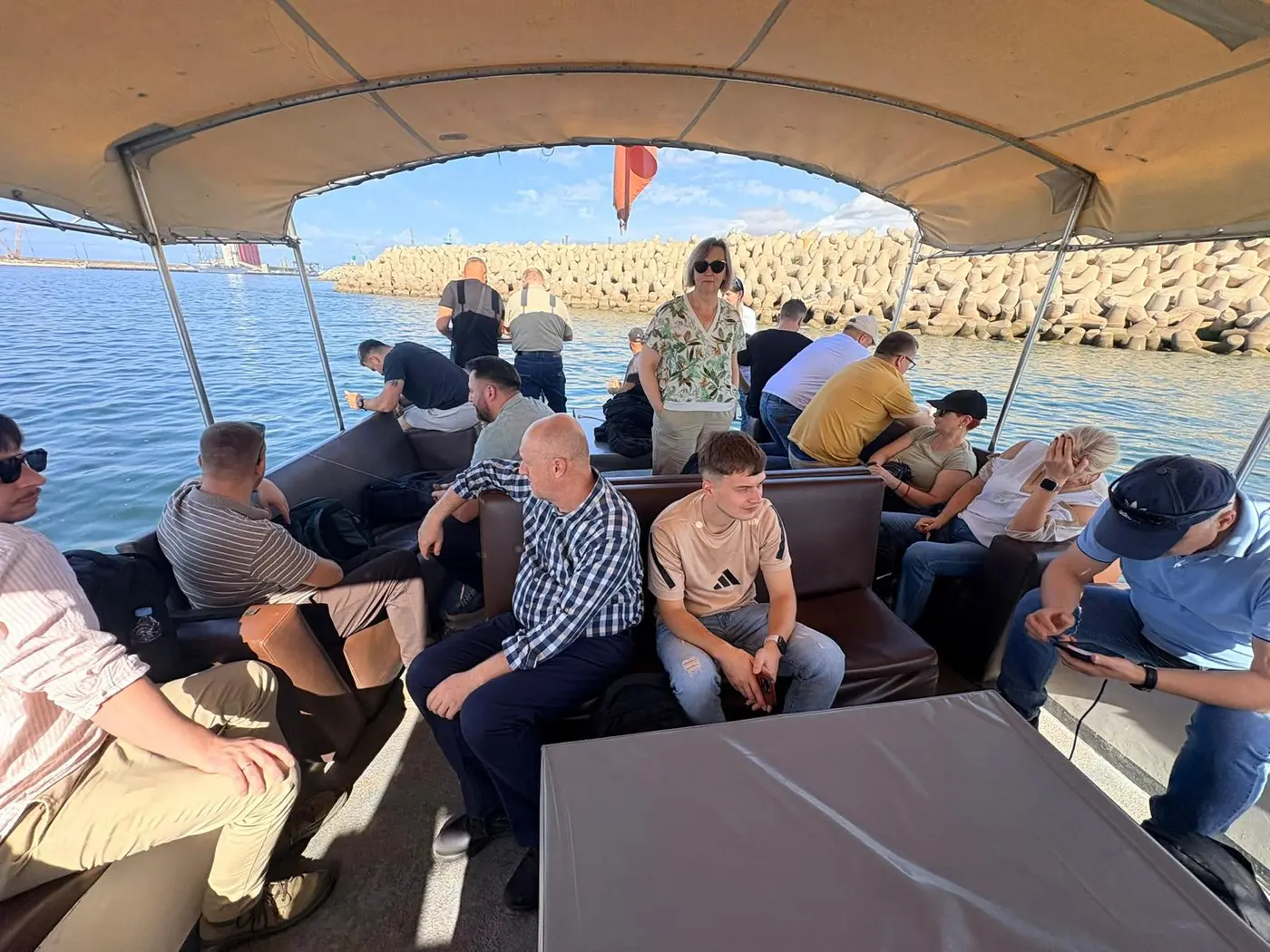
Beyond the farms there was time for Marrakech – the Koutoubia Mosque, the Dar El Bacha Museum, the souks, the Majorelle Garden and Jemaa el-Fnaa square – for a sunset dinner on a dune in the Agafay desert, for the port and medina of Essaouira, and for Agadir on the Atlantic.

What does Moroccan agriculture teach?
- how to produce with scarce water,
- how to gear a farm to export and the requirements of foreign buyers,
- how cooperatives build a brand around a local raw material, such as argan oil,
- how to connect farming with the region’s traditions and food.
Want to visit Morocco with your own group? We will put together a program with farms chosen for your specialty – citrus, olives, vegetables, irrigation.
See the Morocco tour